Zebra medical newsletter May 2026
Dear Zebra community,
In this edition we continue our PICC-port theme, but this time as part of our unpacking WoCoVA series. We are again focusing on its use in the oncology setting, but more importantly, with reference to the latest literature and international global best practice coming out of WoCoVA 2026. I have made sure that all references are cited at the end of the letter.
Saturday 9th May saw our first PICC-port workshop in Gauteng with Dr Hugo Minnaar again at the helm doing the instructing and the placement. Our vascular access courses are unique for many reasons, but most notably for the fact that every course is accompanied by a live patient placement. Putting all the theory into practice is imperative, and when delivered by someone with Hugo’s exceptional skills, this makes for upskilling at the level that Zebra Medical strives for “Care without Compromise”. In a similar vein (no pun), we provide everything to these patients on a pro bono basis, again, in the firm belief that doing the right thing the right way sets us apart.
May’s newsletter is dedicated to finding the PICC-port its rightful place under our African sun. It’s not the risk of getting left behind that makes me fearful, it’s the risk that we are doing our patients’ (yes, “ours” in as much as “yours”) the disservice of not keeping up, when actually, we can. Our patients deserve better.
Let’s start today with what it means – from a clinical and psychological perspective – for a breast cancer patient to be blessed with a PICC-port as her/(his) VAD of choice.
Clinical and Psychological Superiority of PICC-ports in Oncology
Clinical Emergence of PICC-port superiority over the past 15 years
The PICC-port represents possibly the most significant clinical evolution in totally implantable venous access devices (TIVADs) of the last decade.
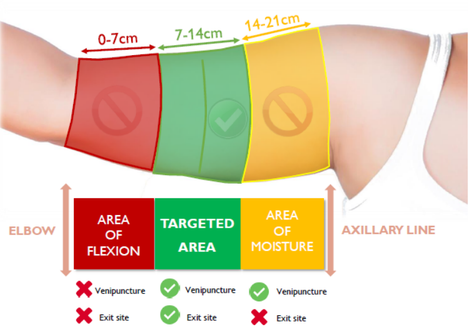
Unlike traditional arm-ports (aka Brachial), the modern PICC-port specifies reservoir placement in Dawson’s “Green Zone” (the middle third of the upper arm) to optimize patient comfort and device stability.
Clinical Performance and Safety Profile
The reliability of PICC-ports is established by the GAVeCeLT multicenter study of 4,480 patients over 60 months. With a median follow-up of 15.5 months, the study demonstrated that PICC-ports offer a safety profile comparable or superior to traditional chest-ports.
• Psychological and Social Benefits:
PICC-ports have a more favorable impact on psychological well-being, social aspects, and local discomfort. Clinical research directly comparing PICCs to PICC-ports in women with breast cancer demonstrates that patients with PICC-ports express a significantly higher degree of overall satisfaction and are far more likely to believe that the device insertion was a positive decision.
• Reduced Self-Consciousness:
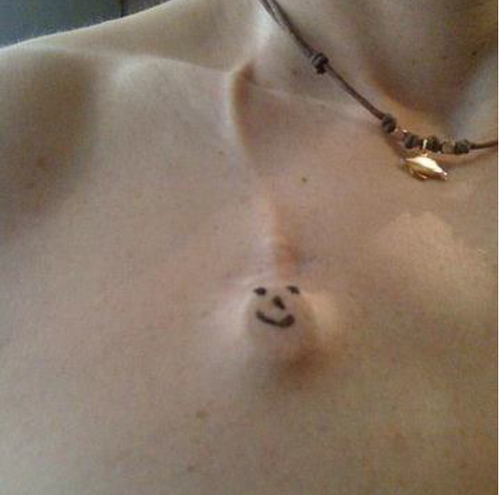
By avoiding a chest-based port (TIVAP) or a visible arm device, PICC-ports preserve body image and reduce the need for people to comment on the device. The improved aesthetics that a PICC-port allows should not be underestimated. For female patients especially, this is a key element that is repeatedly mentioned in the latest studies. While central venous access devices (CVADs) are essential for safely delivering irritant or vesicant chemotherapy, traditional chest-ports can cause psychological distress, social stigma, and body image issues due to their visibility on the chest.
• Improved Daily Functioning:
Because they are fully implanted, PICC-ports interfere less with daily activities like showering and clothing choices compared to the external, visible part of a traditional PICC line or external VADS.
• Higher Acceptance:
PICC-ports are generally better accepted, particularly in younger women (under 60).
• Maintenance Burden:
PICC-ports require the same care and maintenance as chest ports. The latter being a concept well familiar to our oncology units and chemo sisters in South Africa.
• When Chest-ports Contraindicated:
Accessing the cervico-thoracic area may be contraindicated or completely inaccessible for breast cancer sufferers due to prior bilateral mastectomies with prostheses, axillary node dissection, or radiodermatitis. PICC-ports resolve this by relocating the access site to the arm, which significantly improves patient acceptance.
WoCoVA | SIP-port Bundle
The decision to utilise a PICC-port should be guided by the SIP-port (Safe Insertion of PICC-ports) 8-step bundle, which is the gold standard for minimizing complications.
Zebra Medical is the singular medical device company in South Africa that can provide you with EVERY element prescribed by the GAVeCeLT bundle.
- The Butterfly handheld ultrasound probe for procedural assessment as well as catheter tip navigation and placement (“the Bubble Test”)
- Zebra ultrasound kits with probe covers and snap-pack gel (which will be available again mid-June 2026)
- Premium vascular range for all your VAD requirements (Vygon)
- ECG Tip Navigation and Positioning devices (The Pilot and Vygocard)
- The correct catheter locking device
- The correct securement device for the catheter, being SecurAcath (launch date July 2026). Learn more, visit: https://securacath.com. The latter requires a newsletter of its own!!
We can meet all of your vascular access requirements at every touch point in your patient’s vascular access journey with premium products that meet the highest standards of international best practice. Plus, we can provide the training to ensure your proficiency, together with superior service support, for you and your patients.
Let’s sum this up ….
The PICC-port offers a “low-risk” alternative to chest-ports by eliminating the irreducible intra-procedural risks of pneumothorax and hemothorax. Simultaneously, it provides a dramatic improvement in reliability and Quality of Life.
The PICC-port makes it possible to deliver a higher standard of care that respects both clinical outcomes and our patients’ human experience. And finally, by offering a high level of discretion and minimising interference with daily life, PICC-ports support resilience and enable patients to maintain a sense of normalcy throughout their treatment journey.
Warm regards,
“We are all guided by life events, some traumatic and some great… it is these moments that inspire us. At the time, we may not understand them or why they are even happening, yet they pave the way to making some of the most amazing changes.
During my experience with those suffering from breast cancer, I have come to understand that people need 2 things in the face of this devastating diagnosis; honesty and dignity.
PICC-ports are one of the smallest ways to help provide people with cancer with some level of dignity, by making it easier to receive chemotherapy and leaving the scar in a place that is barely visible. It allows them to live their lives as close to normally as possible.”
Dr Fatima Hoosain is a specialist surgeon at a super-specialist breast and thyroid centre. She is the Principal of Apffelstaedt, Hoosain and Associates.
Dr Hoosain completed a Fellowship in Endocrine Surgery through the European Society of Endocrine Surgeons. She is a member of several surgical societies and holds an MBChB from Stellenbosch University and an MMed in General Surgery.
References:
- Bertoglio, S. et al. (2022) ‘A multicenter retrospective study on 4480 implanted PICC-ports: A GAVeCeLT project’, The Journal of Vascular Access , Vol 24(5), pp. 1114-1120.
- Brescia, F. et al. (2023) ‘A GAVeCeLT bundle for PICC-port insertion: The SIP-Port protocol’, The Journal of Vascular Access.
- Pinelli, F. (2025) ‘Choice between thoracic port (chest-port) and PICC-port: indications and contraindications’, GAVeCeLT/WoCoVA Presentation.
- Xiao, M. et al. (2025) ‘Comparison of PICC versus PICC-port in terms of complications and cost-effectiveness in nasopharyngeal carcinoma patients: A randomized controlled trial’, The Journal of Vascular Access.